

Transformative Urban Open Space

The ULI Urban Open Space Award 2010–2015
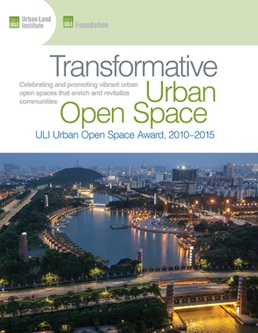
Richly illustrated, this publication highlights recent award winners and finalists of the ULI Urban Open Space Award, includes articles framing the debate on the value of these spaces, and offers a general overview of the award's history since its inception in 2010."It is now more relevant than ever to share global best practices related to land use. Rapid urbanization and expansion in many countries have brought to the forefront the importance of urban open space, and we have seen many examples of exceptional open-space initiatives worldwide that are worth recognizing and sharing." —Patrick L. Phillips, ULI Global Chief Executive Officer
Book Summary: Richly illustrated, this publication highlights recent award winners and finalists of the ULI Urban Open Space Award, includes articles framing the debate on the value of these spaces, and offers a general overview of the award's history since its inception in 2010."It is now more relevant than ever to share global best practices related to land use. Rapid urbanization and expansion in many countries have brought to the forefront the importance of urban open space, and we have seen many examples of exceptional open-space initiatives worldwide that are worth recognizing and sharing." —Patrick L. Phillips, ULI Global Chief Executive Officer