

How Parks Advance Sustainability and Resilience


Report Summary: As communities grapple with the rising impacts of climate change, local leaders are looking to parks as powerful tools to advance sustainability and resilience. Parks are widely considered essential infrastructure in cities and provide important environmental and health benefits to individuals and neighborhoods. When leveraged to their full potential, parks and green spaces can also become a core strategy in the fight against climate change.
The following fact sheets describe five innovative ways that parks and green spaces can reduce carbon emissions and mitigate climate threats, all while advancing health, equity, and quality of life in urban areas.
Fact Sheets
-
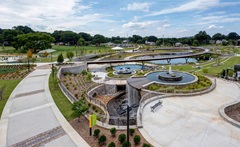
Promoting Green Infrastructure
Outlines how green infrastructure harnesses the power of natural systems to minimize flooding and improve water quality.
Learn More -
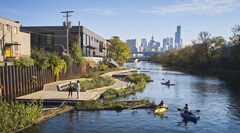
Supporting Ecosystem Restoration
Details how parks and green spaces can help degraded lands and waterways recover from human disturbances and climate change.
Learn More -

Mitigating Urban Heat
Shares about the dangers of extreme heat, and how parks and green spaces are some of the first and best lines of defense for cooling cities.
Learn More -

Leveraging Parks as Carbon Sinks
Explains how the natural elements commonly found in parks, such as vegetation, soil, and waterways absorb more carbon from the atmosphere than they release, making them effective carbon sinks.
Learn More -
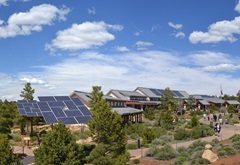
Investing in Solar Energy
Explores how solar energy generated in parks can power park facilities and support community solar programs.
Learn More